Magazine














Interview on the TOMMI criteria catalog with Prof. Frauke Schade from the HAW
Children's software prize
Editor
June 13, 2023
Why is there a list of criteria for children's software?
Prof. Schade: “Media expert Thomas Feibel identified the need for criteria to evaluate children’s software. He assigned the task to a project team of 14 fifth-semester students in the Library and Information Management program at HAW Hamburg during the 2020/2021 winter semester. The goal was to develop a set of criteria for evaluating high-quality children’s software that would serve as a practical guide for librarians in the acquisition process, while also being accessible to children, educators, and interested parents.”
What do you mean by "children's software"?
Prof. Schade: “Children’s software is geared toward children’s everyday lives and takes their needs and interests into account. It provides a safe space where children can navigate freely without being hooked by in-game advertising or revealing their personal information. Children’s software is intuitive for the relevant age groups—both intellectually and in terms of fine motor skills. Children’s software includes educational and entertainment software as well as electronic toys, provided the hardware is supplemented by software, such as apps or programs. However, it is not necessarily the case that children’s software must be developed specifically for this target group; it may also have been created in other usage contexts.”
How did you work with your students?
Prof. Schade: “The students first assessed the current state of research. They examined the children’s software market—providers, consumers, and market dynamics. In addition, the students evaluated existing criteria for assessing children’s software developed by other institutions. To develop a sense of evaluation criteria, it was important for the project team to gain their own experience with children’s software. In structured software tests, over 80 digital and electronic applications were subsequently tested and evaluated using test protocols. To gain a more comprehensive and up-to-date understanding of the research question, approximately 20 expert interviews were subsequently conducted with children, game developers, media educators, child and youth protection advocates, as well as teachers, early childhood educators, and librarians, and the content of these interviews was analyzed. The result is a catalog of criteria comprising approximately 250 criteria covering the aspects of safety, technology, playfulness, content, design, and educational value.”
What were the specific circumstances involved?
Prof. Schade: “Due to the COVID-19 pandemic, the project was conducted entirely online. The project team met weekly via Zoom. Experts, such as media educator Vera Marie Rodewald and the project’s client, Thomas Feibel, were also invited to the team meetings to provide insights into the lived experiences, socialization, and media usage behaviors of children and adolescents. Project management was handled using Microsoft Teams, while collaborative work—such as developing the research design for the expert interviews or compiling the list of criteria—was carried out via Google Drive. Team members also communicated with one another via the Moodle learning platform or in WhatsApp groups. Precisely because in-person meetings were not possible, the project team placed great emphasis from the very beginning on ensuring that social interaction was not neglected. As a result, team meetings also included playing games together or discussing current topics and issues.”
Has the list of criteria been finalized?
Prof. Schade: “The children’s software market is constantly evolving. New applications, formats, and features are entering the market. Due to the COVID-19 pandemic, we can also expect the children’s software market to receive new momentum and accelerate significantly once again.”
What are the key insights you have drawn from the list of criteria?
Prof. Schade: “The most important finding is simple: Potential evaluation criteria are as diverse as the different types, content, and formats of children’s software. The most important criterion, however, is that children’s software should be fun for children. The experts surveyed and the project team agreed on this point.”
What prize did the project win?
Prof. Schade: “The project won the 2021 TIP Award—Team Award for Information Professionals. The award recognizes student team achievements that make an innovative contribution to finding concrete solutions to issues related to digital transformation in the professional practice of libraries and information institutions. The award is presented by the journal b.i.t online, Schweitzer Fachinformationen, and KIBA—the Conference of Information and Library Science Education and Degree Programs, Section 7 of the German Library Association, and the Education Commission of the German Society for Information and Knowledge.”
About TOMMI
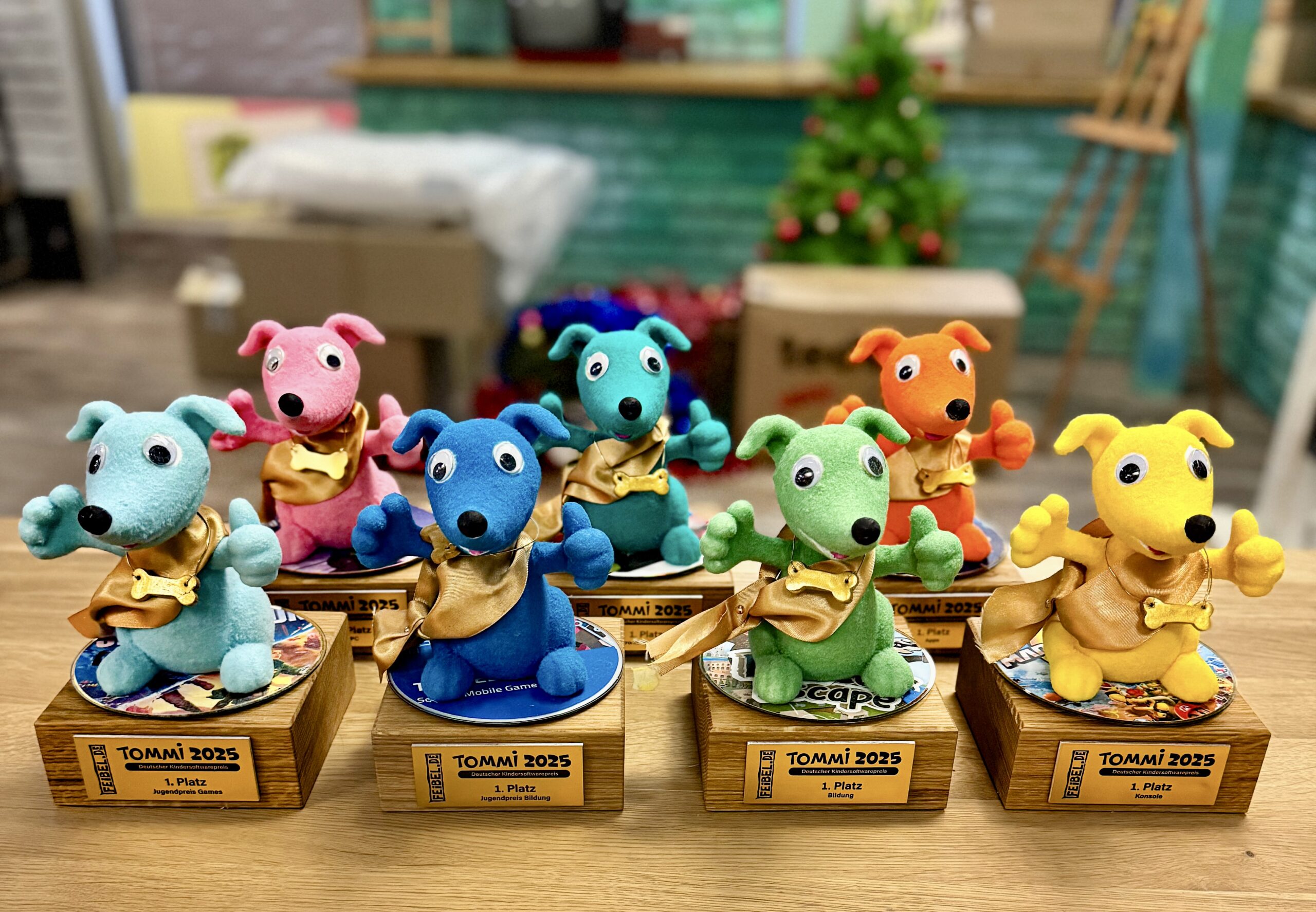
TOMMI.kids is the landing page for all TOMMI activities and is aimed at parents, educators, libraries, and influencers. The focus is on successfully organized events for children and teens—featuring meaningful participation, concrete media literacy training, and lots of fun. These offerings include the renowned German Children’s Software Award TOMMI, the TOMMI Digital Preschool Award for early childhood media education, and the new and informative TOMMI Magazine.